

Choosing your child’s first school is a big decision. You are not simply looking for a classroom close to home. You are choosing an environment where your child will begin building confidence, independence, social skills and their relationship with learning.
For parents searching for a Montessori preschool in Bangalore, the number of options can make the decision difficult. Schools may use similar words such as “child-centred”, “activity-based” and “Montessori”, but the day-to-day experience can be very different.
So, what should you actually look for?
A good starting point is to understand what Montessori education is designed to do and then look closely at how a preschool puts those ideas into practice.
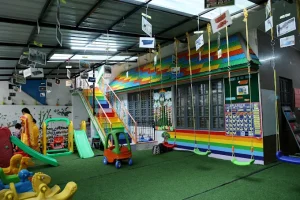
What makes Montessori education different?
Montessori education places the child at the centre of the learning process.
Rather than expecting every child to complete exactly the same activity at exactly the same time, a Montessori environment gives children opportunities to learn through purposeful activities, exploration and hands-on materials.
The Association Montessori Internationale describes Montessori environments as child-centred spaces designed to encourage hands-on, self-directed learning. Materials are accessible to children, and teachers guide learning while allowing children to develop at an appropriate pace. Association Montessori Internationale
Independence is also a major part of the Montessori approach. Children are gradually encouraged to make appropriate choices, complete tasks, care for their surroundings and become more confident doing things for themselves. Association Montessori Internationale
For young children, this can make the classroom feel less like a place where information is simply given to them and more like a place they actively explore.
1. Look at the learning environment, not only the classroom decoration
A beautiful preschool can create a good first impression, but look beyond colourful walls and furniture.
Ask yourself what children are actually able to do in the classroom.
Can they reach learning materials themselves? Are there spaces where they can work independently? Do activities encourage touching, sorting, building, moving, creating and solving problems?
Montessori environments are intentionally organised so that children can interact with materials and participate more independently. The environment itself becomes part of the learning experience. Association Montessori Internationale
At Butterflies Montessori, our approach includes hands-on learning alongside practical, creative and physical experiences. Children participate in activities such as art and craft, gardening, storytelling, Show & Tell, sports, games and yoga as part of their wider development. Butterlies Montessori Butterlies Montessori
When visiting a preschool, therefore, don’t only ask, “Does this classroom look nice?”
Ask:
- What will my child be able to explore here?
- How much opportunity is there for hands-on learning?
- Can children make age-appropriate choices?
- Are learning materials accessible to them?
- Is there space for movement as well as focused activity?
- How are creativity, communication and physical development supported?
The answers reveal much more about the learning experience.
2. Choose a programme suited to your child’s age and stage
Early childhood changes quickly. The learning needs of a two-year-old are very different from those of a five-year-old preparing for primary school.
A strong preschool programme should reflect those developmental differences rather than simply offering one curriculum to every age group.
Butterflies Montessori currently provides four stages from approximately ages two to six: Toddlers/Playgroup for ages 2–3, Mont-1/Nursery for ages 3–4, Mont-2/LKG for ages 4–5 and Mont-3/UKG for ages 5–6. Butterlies Montessori
In the younger years, the emphasis naturally begins with exploration, language, movement, social development and growing independence.
As children progress, activities can gradually introduce more advanced language, early mathematics, problem-solving and responsibility.
By the Mont-3 stage, Butterflies Montessori focuses on strengthening literacy, numeracy, critical thinking, collaboration and confidence as children prepare for the transition to primary school. Butterlies Montessori
When comparing schools, ask what changes from one level to the next. You should be able to see a clear developmental journey rather than four programmes with different names but essentially the same activities.
3. Find out how the school encourages independence
One of the most recognisable ideas in Montessori education is helping children gradually learn to do things for themselves.
That does not mean leaving children without support.
It means creating an environment where an adult demonstrates, guides and observes while giving the child enough space to practise.
For a preschool child, independence can appear in very small moments: choosing an activity, returning materials to their place, completing a task, caring for belongings, helping with simple practical activities or learning to solve an age-appropriate problem before immediately asking an adult to do it.
The American Montessori Society describes Montessori learning as individually paced and designed to foster independence, with teachers using observation to guide children through learning appropriate to their abilities and interests. The American Montessori Society
These small experiences can help a child begin to develop confidence in their own abilities.
4. Pay attention to the role of the teacher
The teacher remains extremely important in Montessori education, but the role differs from a classroom where the adult is speaking to the entire class for most of the day.
A Montessori educator observes, introduces activities, demonstrates how materials are used, supports children when necessary and adjusts the environment based on children’s developmental needs.
AMI describes the adult’s role as guiding children towards independent learning rather than controlling every part of the learning experience. Association Montessori Internationale
When visiting a preschool, notice how teachers interact with children.
Do they speak respectfully? Do they give children time to respond? Do they know when to help and when to allow the child to try? Do they appear attentive to individual children instead of only managing the whole group?
Butterflies Montessori states that its facilitators are experienced and certified and that sessions are designed to be engaging and inclusive for young learners. Butterlies Montessori
Meeting the teachers before enrolling can therefore be just as valuable as looking at the facilities.
5. Look beyond ABCs and numbers
Academic readiness matters, particularly as children move towards primary school. But preschool development is much broader than how quickly a child can recite numbers or write letters.
Communication, coordination, concentration, creativity, social interaction, emotional development and confidence all matter during the early years.
That is one reason Montessori education considers development of the whole child rather than treating academics as the only measure of progress. Association Montessori Internationale
At Butterflies Montessori, activities extend beyond classroom academics.
Art and craft encourage children to explore materials and express ideas while developing fine motor skills. Gardening introduces responsibility and interaction with nature. Show & Tell gives children opportunities to speak and express themselves, while storytelling and puppet-based activities encourage imagination and communication. Butterlies Montessori
Sports, games and yoga are also incorporated to support physical activity, coordination and focus. Butterlies Montessori
For parents, the question should therefore be broader than “What will my child learn?”
Also ask, “What kind of person will this environment help my child become?”
6. Consider how the school supports each child’s pace
Children of the same age do not develop every skill at exactly the same time.
One child may become fascinated by language while another is drawn towards numbers, practical activities or creative work. A child may feel confident socially but need more time in another area.
Montessori education recognises these differences by allowing teachers to observe individual development and introduce appropriate activities rather than expecting identical progress from every child. Association Montessori Internationale
At Butterflies Montessori, our stated approach is to recognise that each child is unique and tailor learning support to individual needs while encouraging curiosity and independence. Butterlies Montessori
When speaking with a prospective preschool, ask how teachers respond when a child needs either additional support or greater challenge.
Their answer tells you a great deal about whether “child-centred learning” is genuinely part of the classroom.
7. Think about location and your child’s daily routine
The best preschool on paper may not be the best preschool for your family if every morning involves a long, stressful journey.
For young children especially, convenience can make the daily routine easier for both children and parents.
Butterflies Montessori currently has two Bengaluru branches:
B. Narayanapura: PWD Main Road, Gurumurthy Reddy Layout, opposite Yellow Mart, B. Narayanapura, Bengaluru 560016.
Malleshpalya: 10th Main, 2nd Cross, Maruthi Nagar, Malleshpalya, Kaggadasapura, Bengaluru 560075. Butterlies Montessori
If you live or work around these areas, visiting the nearest centre can help you understand the actual classroom environment before making your decision.
Visit the preschool before you decide
Websites, photographs and reviews are useful, but nothing replaces seeing a preschool yourself.
A school visit gives you the chance to experience the atmosphere, meet educators and understand how children spend their day.
Observe how the environment feels. Look at how teachers communicate with children. Ask about the daily routine, learning activities, programme progression and how parents receive updates about their child’s development.
Most importantly, consider whether you can imagine your child feeling comfortable enough there to explore, make mistakes, try again and gradually become more independent.
Discover Butterflies Montessori in Bengaluru
At Butterflies Montessori, we aim to create a nurturing environment where children can explore, grow and develop a lifelong love of learning.
Guided by Montessori principles, our programmes combine hands-on learning with opportunities for independence, creativity, communication, movement and social development. Our programmes begin with Toddlers/Playgroup at ages 2–3 and continue through Mont-3/UKG at ages 5–6. Butterlies Montessori
Families can visit us at our B. Narayanapura or Malleshpalya branches in Bengaluru. Butterlies Montessori
Want to see whether Butterflies Montessori is the right fit for your child? Contact us to learn more or schedule a visit.
